Why Traceability Is More Than a Compliance Checkbox for Build-to-Print Parts
When you have a build-to-print part manufactured, you want certainty: that the right materials were used, that every operation was carried out exactly as agreed, and that the finished product meets every specification. Just as important, you need to be able to prove it. That need for insight keeps growing — not only because OEMs are setting higher standards for their suppliers, but because regulation keeps tightening as well. Traceability plays an increasingly central role in that shift. Thomas van Kessel, MEVI's QHSE coordinator, sees it every day, and shares how MEVI approaches traceability for build-to-print parts.
Rising Demand for Transparency in Build-to-Print Manufacturing
Thomas has worked in Quality, Health, Safety & Environment since 2021, and he's watched the demand for transparency grow steadily. "Many customers want demonstrable certainty about how a product and process came together — where the material came from, for example — and they ask for the documents and certificates to back it up. That's especially true in sectors where safety and quality are critical, like the semicon market, defense, aerospace, and the medical world." In Thomas's view, traceability stopped being just an administrative requirement a long time ago. "It's a way of building trust."
ALWAYS KNOWING WHERE A BUILD-TO-PRINT PART IS
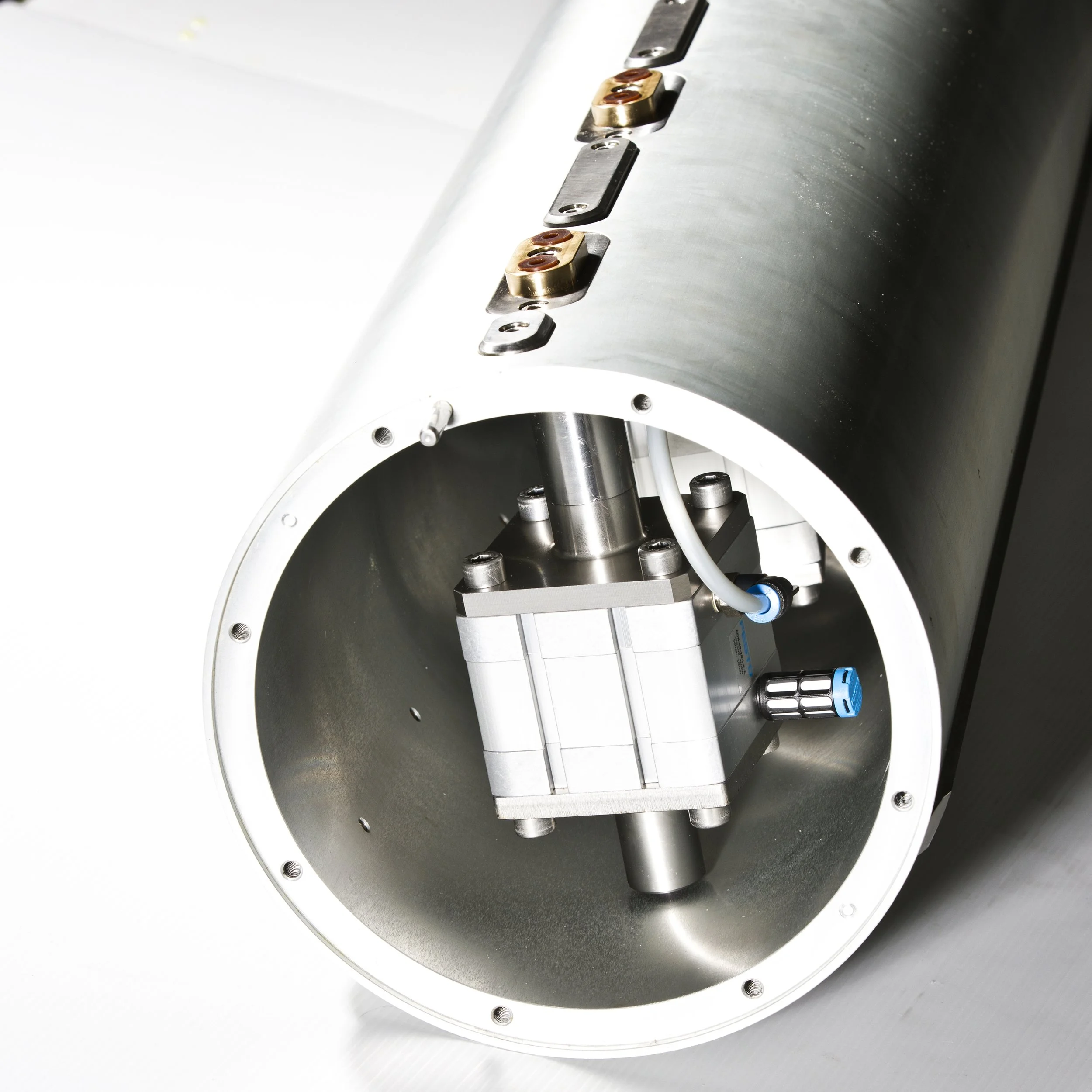
A build-to-print product (see mevi.com/build-to-print-btp) typically travels a long route: multiple operations, several departments, and sometimes external post-processing steps are all part of the process. At MEVI, that route is tracked continuously. Every production order is logged digitally in the ERP system, Isah. On top of that, products are physically accompanied by dossiers and labels throughout production, so it's always clear exactly where a part is.
"That's not just useful for our customers," Thomas explains. "We benefit from it every day too. We know exactly where a product is, which operations have already been carried out, and what the next step is." Does a part still need to go to an external processor or finishing partner? That's visible in the planning too — keeping the entire production process transparent from start to finish.
The Real Value of Traceability: When Something Doesn't Go as Planned
Good traceability proves its worth most when something is out of the ordinary — a customer has a question about a part, an audit is scheduled, or someone needs to investigate exactly how an operation was carried out.
Thanks to the registration in the ERP system and the accompanying documentation, that information is available quickly. Even when a customer wants to run an interim inspection during production, it's immediately clear where the product is — in the measuring room, at an external treatment step, or ready for the next stage. That eliminates searching, and it builds confidence.
Stricter Regulation Is Raising the Bar on Transparency
The growing focus on traceability isn't happening in a vacuum. "Alongside our ISO 9001 (quality) and ISO 14001 (environmental) certifications, we're currently well underway preparing for ISO 27001 certification and compliance with the NIS2 directive," Thomas explains. "Those relate to information security and cybersecurity — increasingly important in the semicon market, where we serve a lot of customers, but this will keep growing in importance for sectors like defense and aerospace too."
That means processes not only need to be executed correctly, they need to be demonstrably under control when it comes to digital security as well. "By setting up our processes accordingly, we're prepared for the requirements of these sectors — and customers in other markets benefit from that too." More and more companies are facing regulation that demands transparency and insight into production processes.
Certificates, Labels, and Tailored Traceability Solutions
Not every customer has the same requirements. Some OEMs ask for a Certificate of Conformity, or CoC (see mevi.com/certificates), confirming that a product was manufactured according to the agreed specifications and materials. Other customers want every individual part to stay identifiable — and that's possible too. The method is entirely up to the customer.
"We can provide products with a unique label, packaging stickers, or a permanent engraving — whatever the customer needs," Thomas explains. "That way, a part stays individually identifiable even after delivery. It gives extra certainty, especially when the same components are produced by multiple suppliers."
Traceability Starts With a Quality Mindset
At MEVI, we don't treat traceability as something we do because we have to. It's a natural part of quality assurance. It helps us stay organized, respond quickly, and answer questions immediately. But more importantly, it gives our customers certainty that every part was demonstrably produced as agreed.
Whether it's an audit, a quality question, or the increasingly strict requirements coming from the semicon market and sectors like defense and aerospace: trust starts with insight. And that's exactly what good traceability makes possible.
Have Questions About Traceability for Your Product?
We're happy to help you find the right approach for your build-to-print parts, whether that's ERP-based tracking, a Certificate of Conformity, or individual part labeling. Get in touch via mevi.com/contact to discuss your traceability requirements.